A 16-foot spiralthat grows foodall winter.
A hand-built zome greenhouse growing year-round on Colorado's Front Range: eight vertical aeroponic towers, a ring of LED light bars and a twin-wall polycarbonate shell on a 3-foot insulated pony wall.
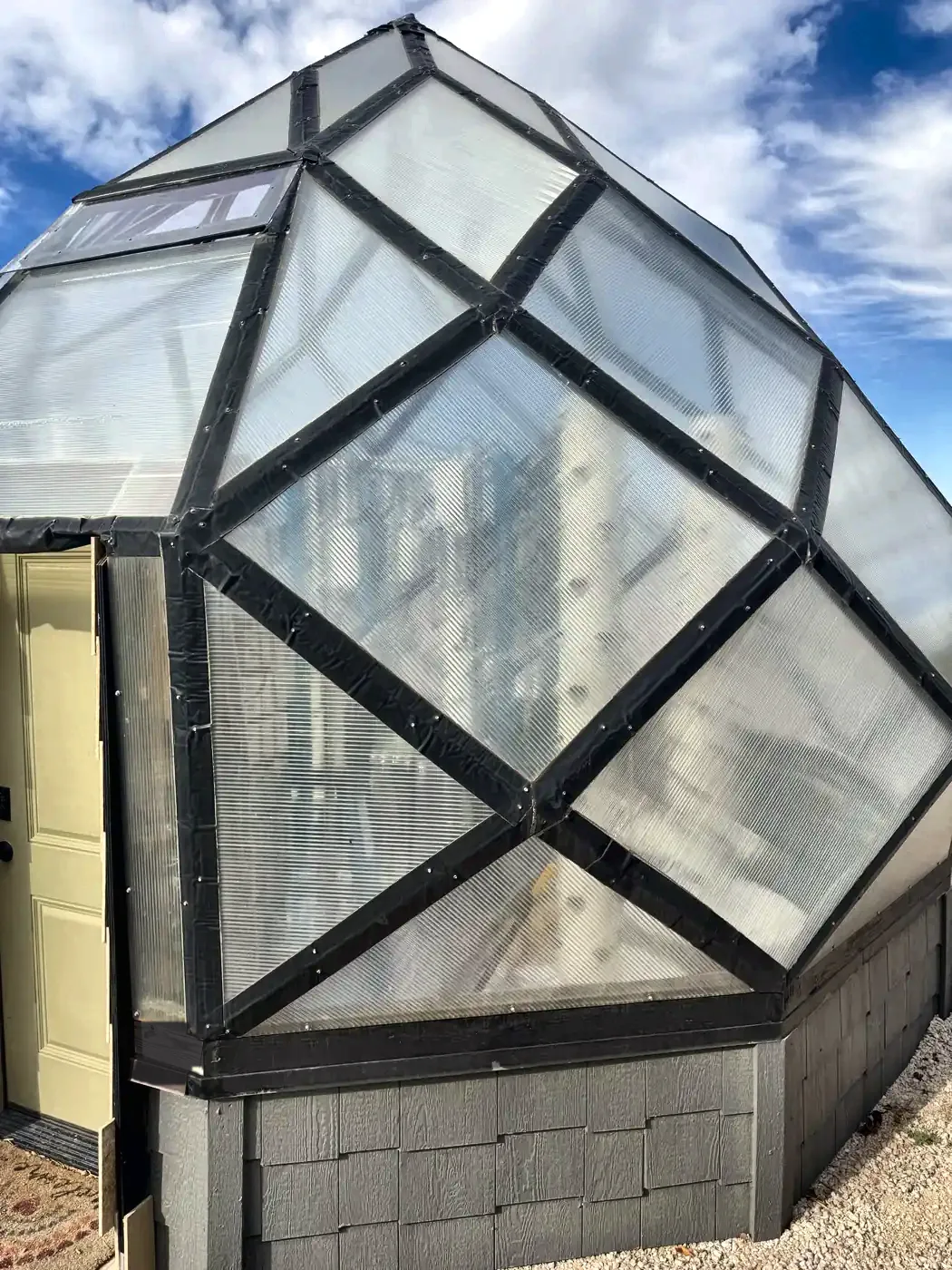
A hand-built zome greenhouse growing year-round on Colorado's Front Range: eight vertical aeroponic towers, a ring of LED light bars and a twin-wall polycarbonate shell on a 3-foot insulated pony wall.
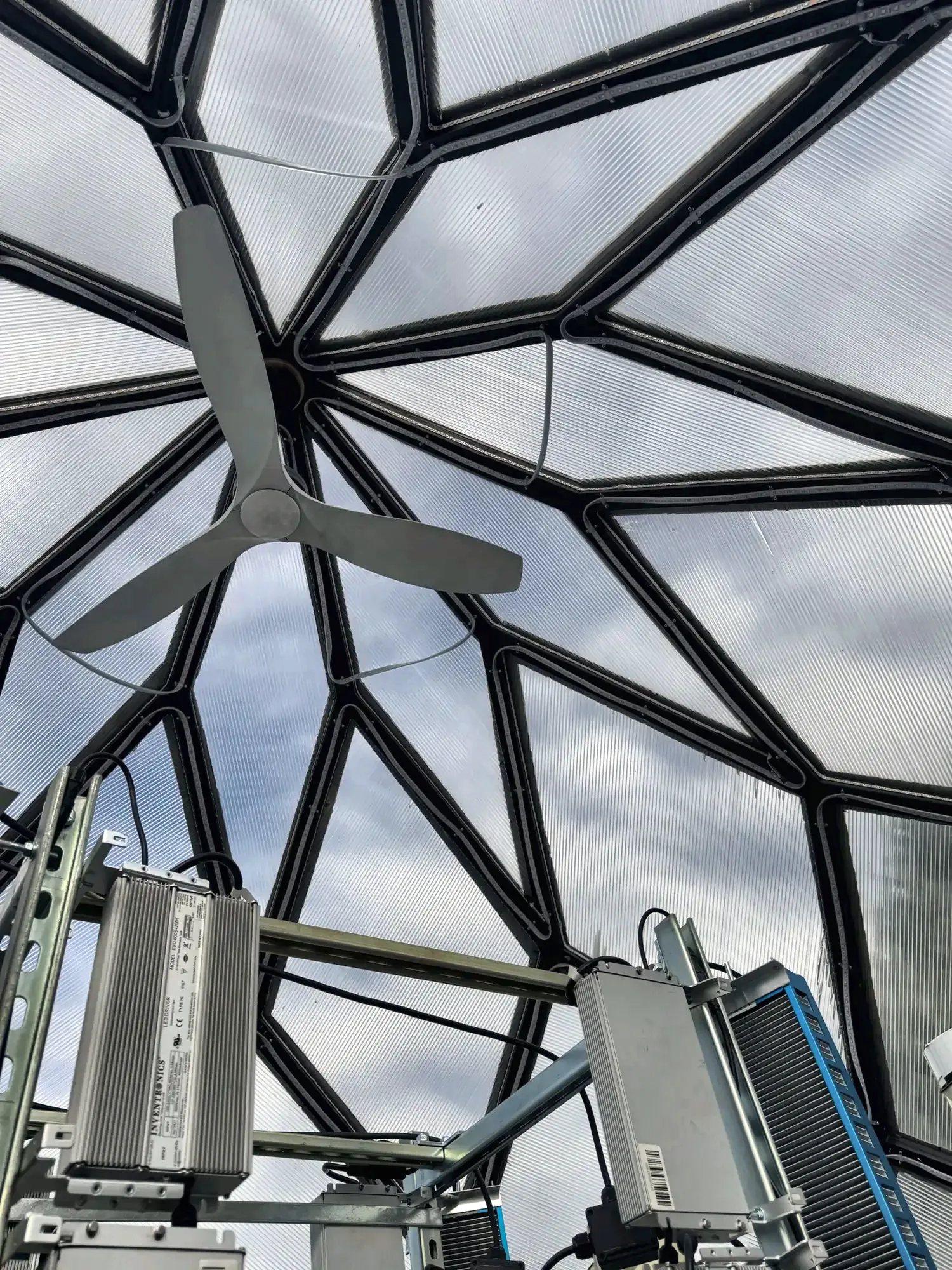
An insulated nutrient barrel of RO-filtered water sits in the center and tops up every tower automatically. Each tower keeps its own reservoir, so the towers never share water: if one plant gets sick, it stays in that tower.
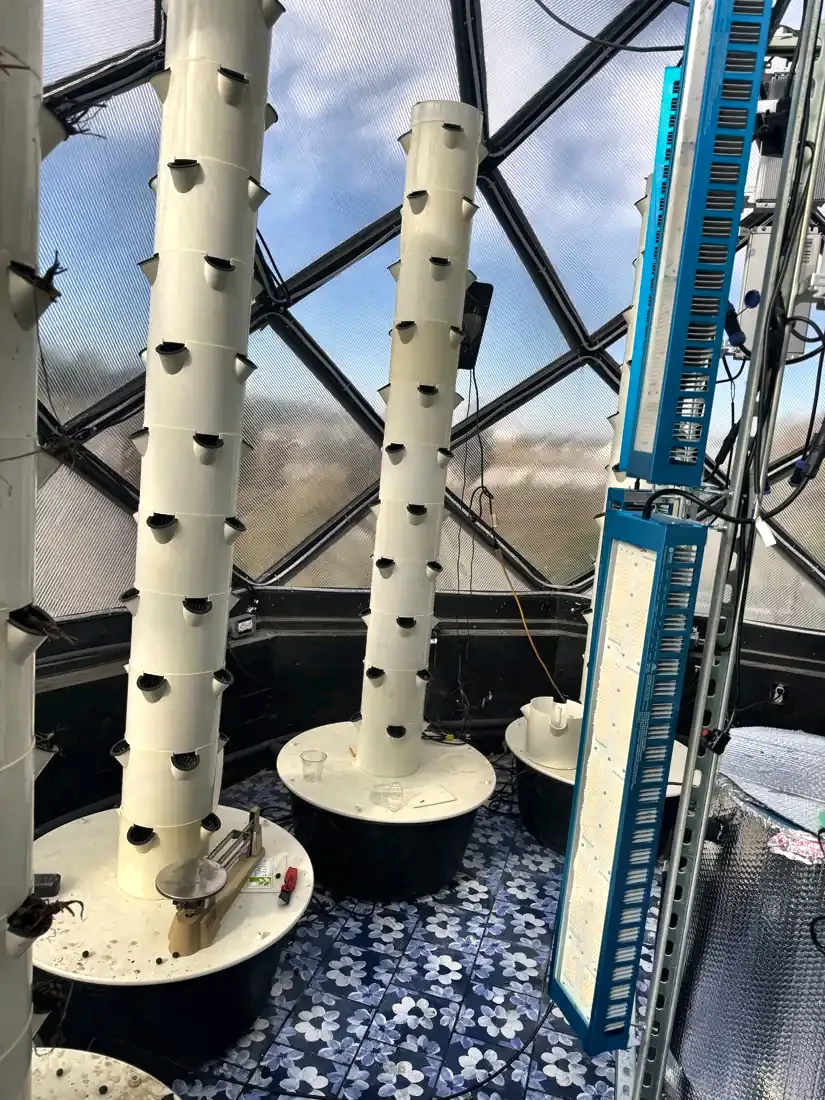
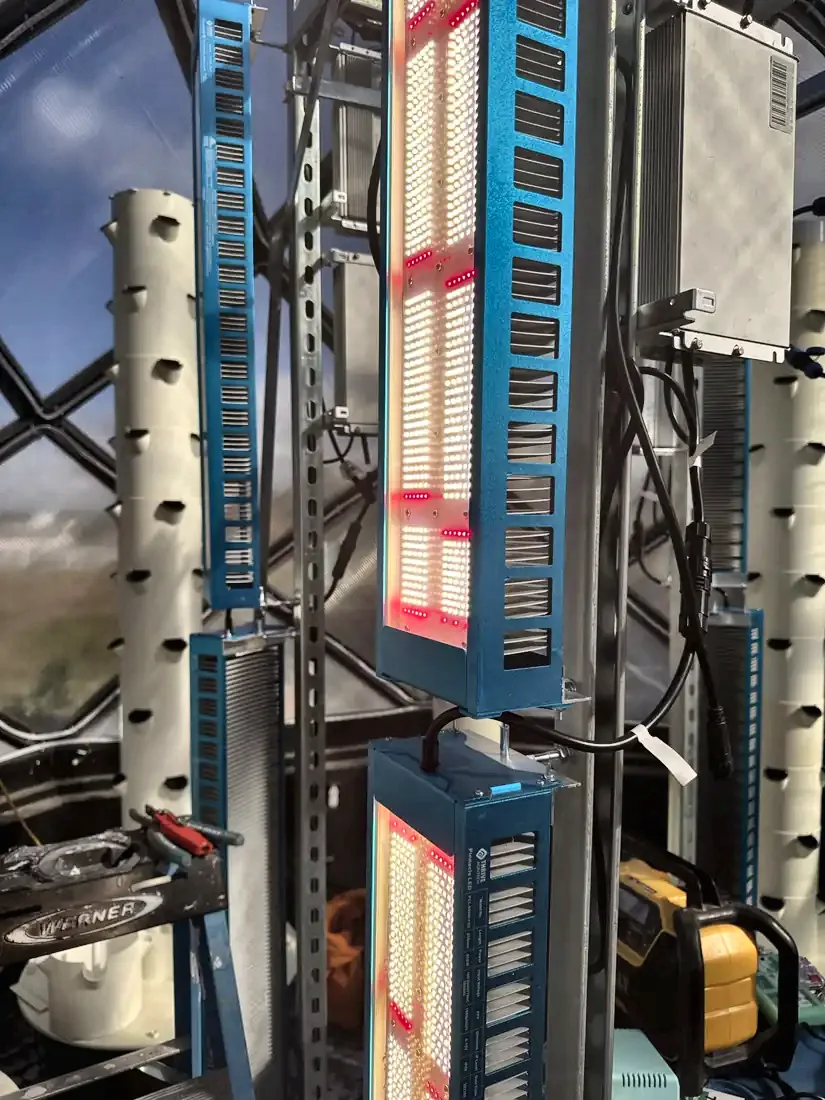
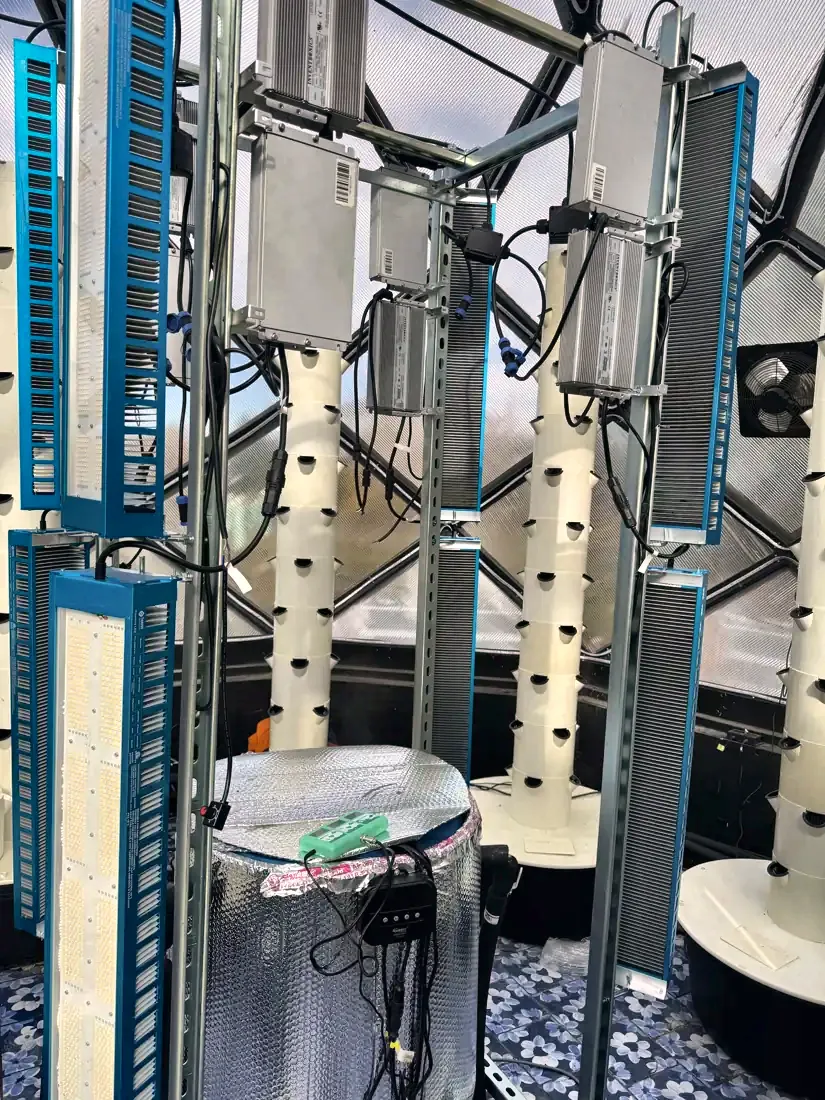
Photos of the zome we built, from framing to first light.
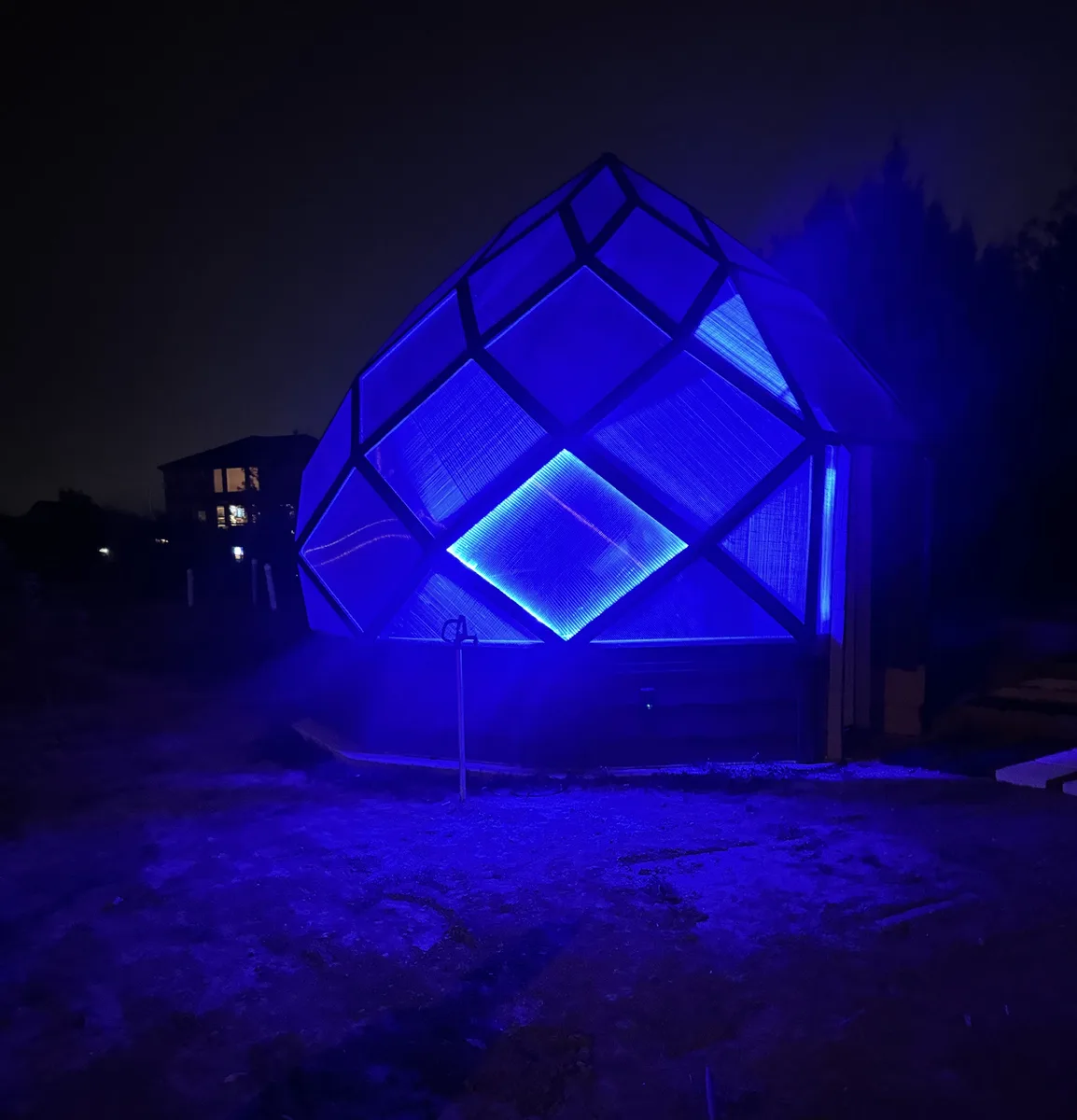
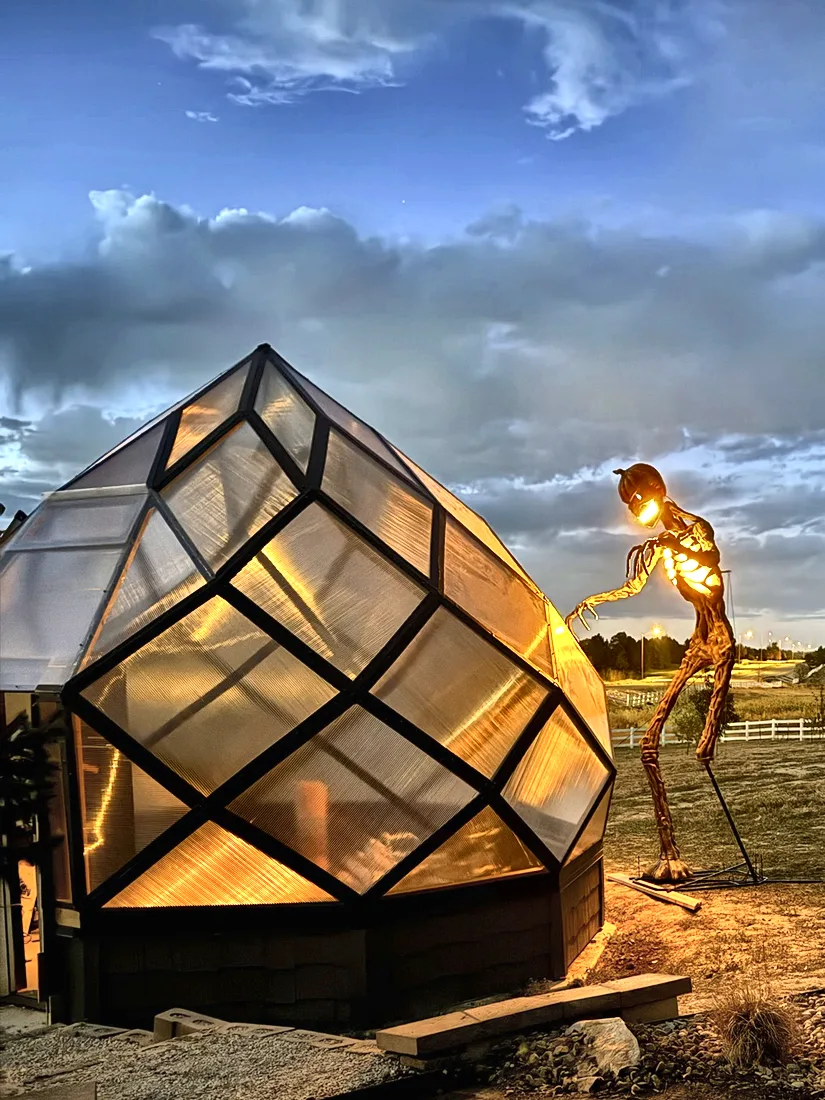
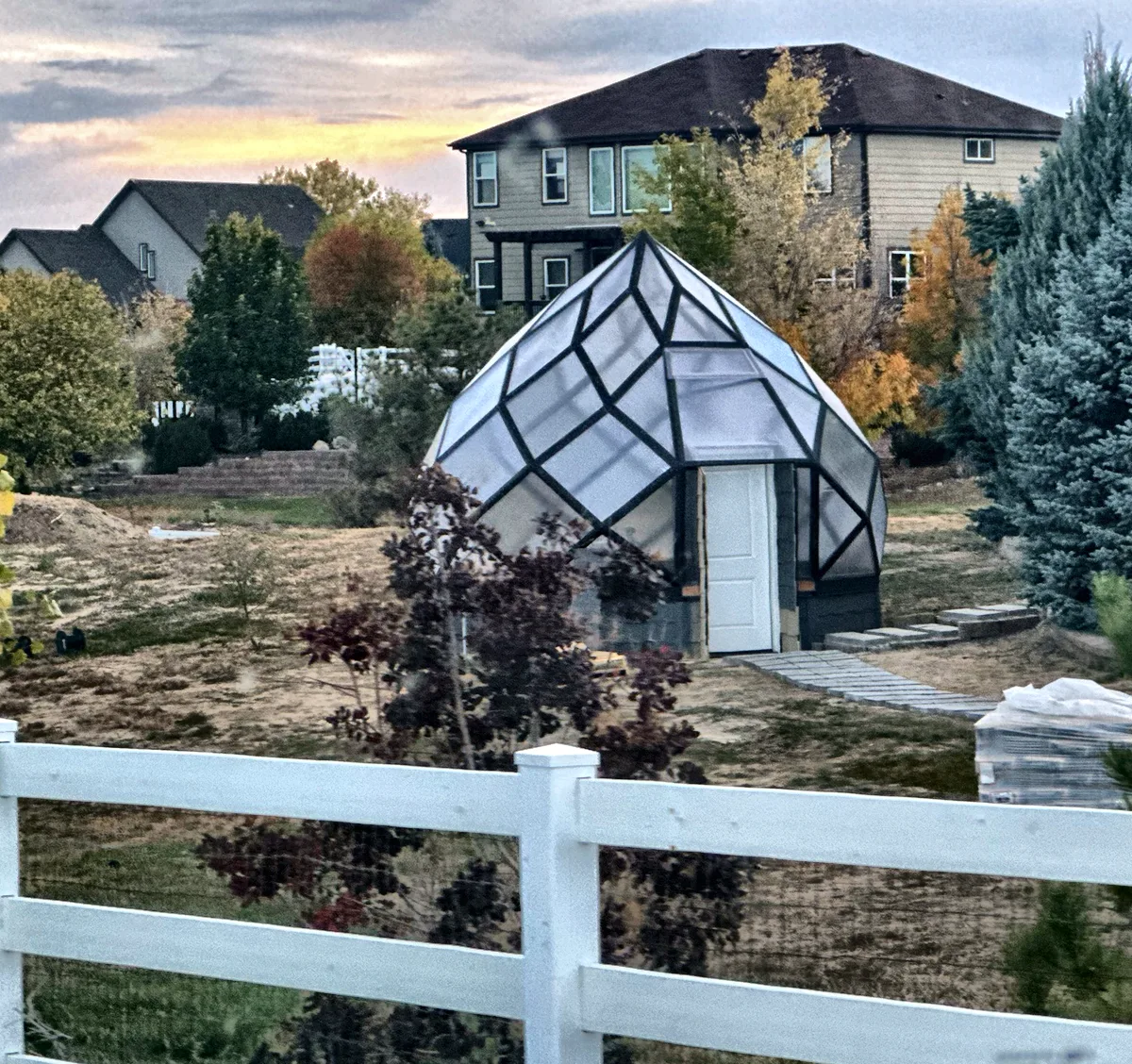
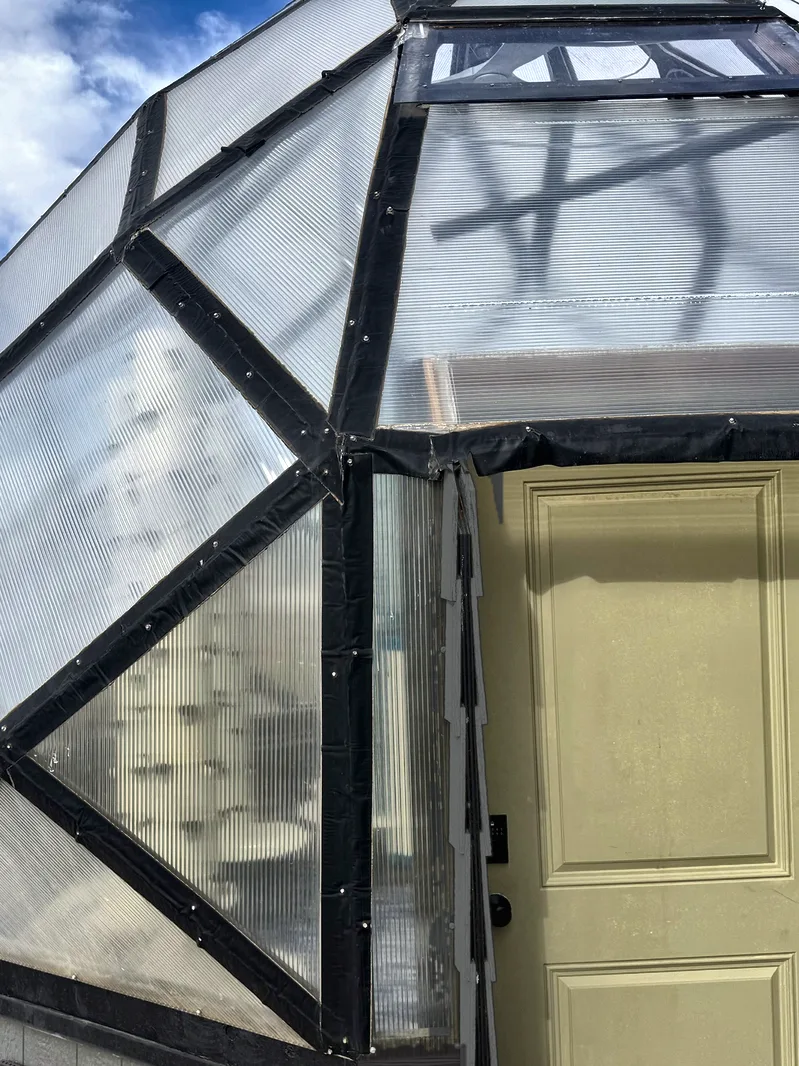
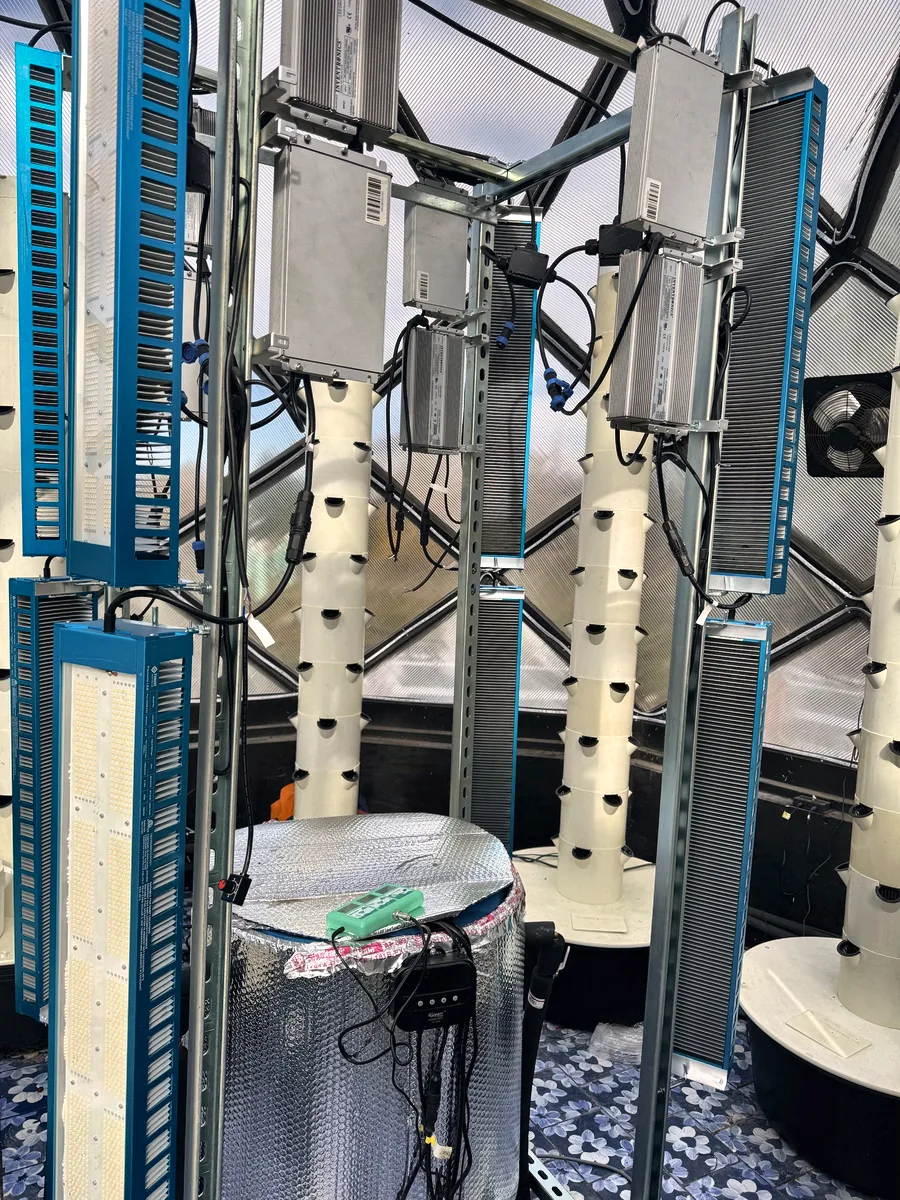
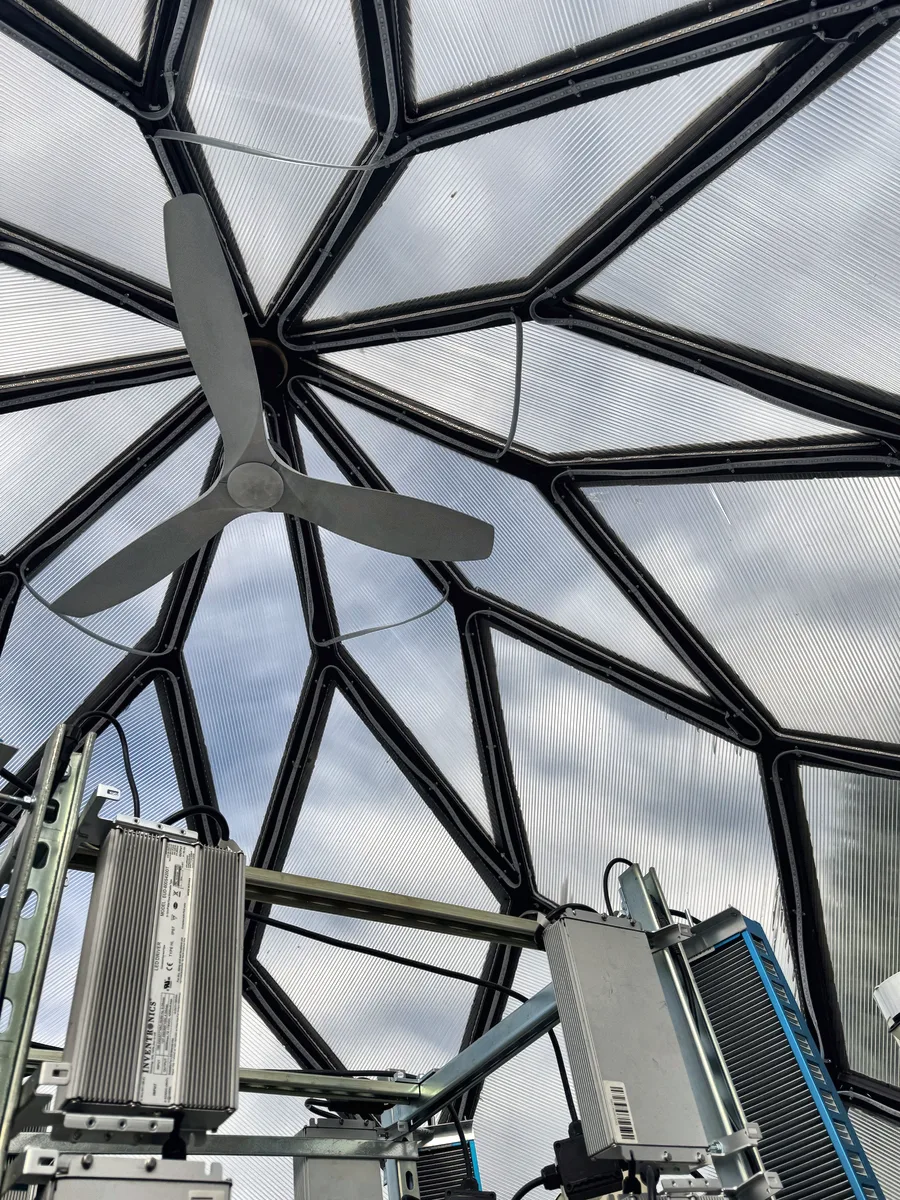
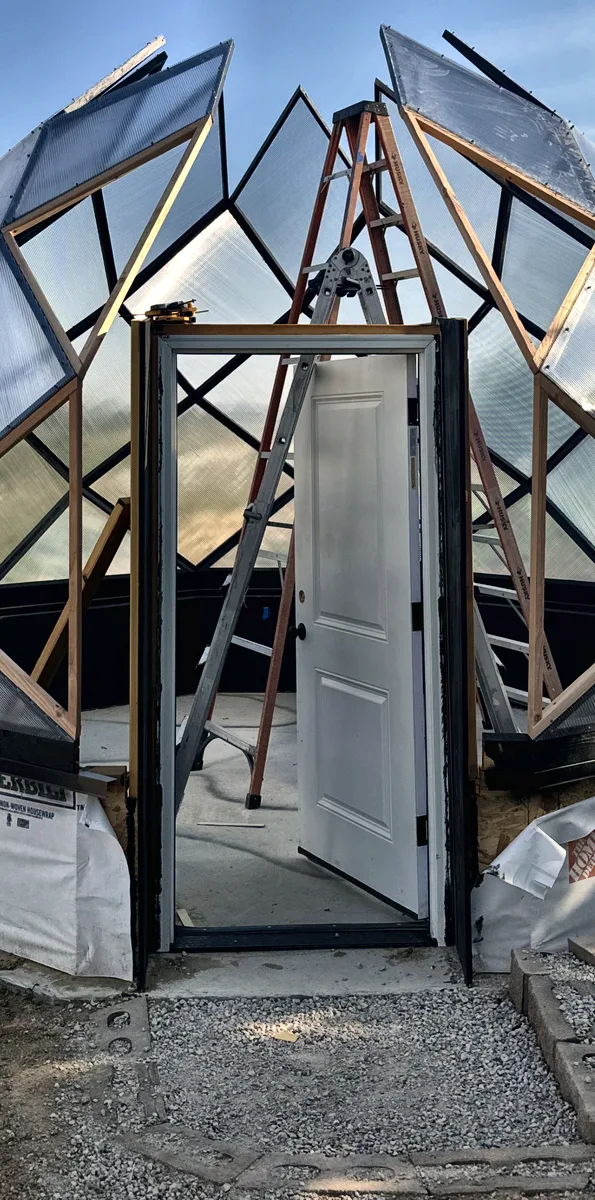
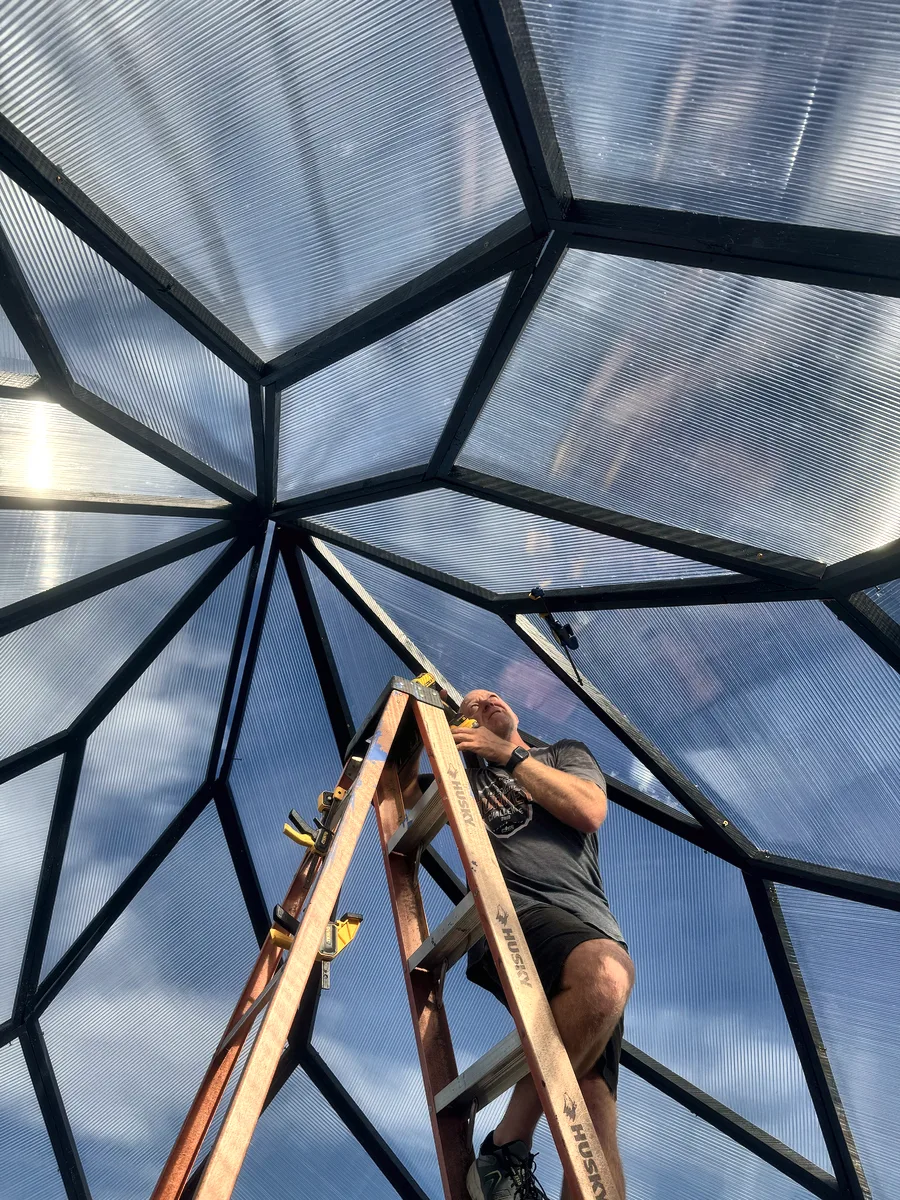
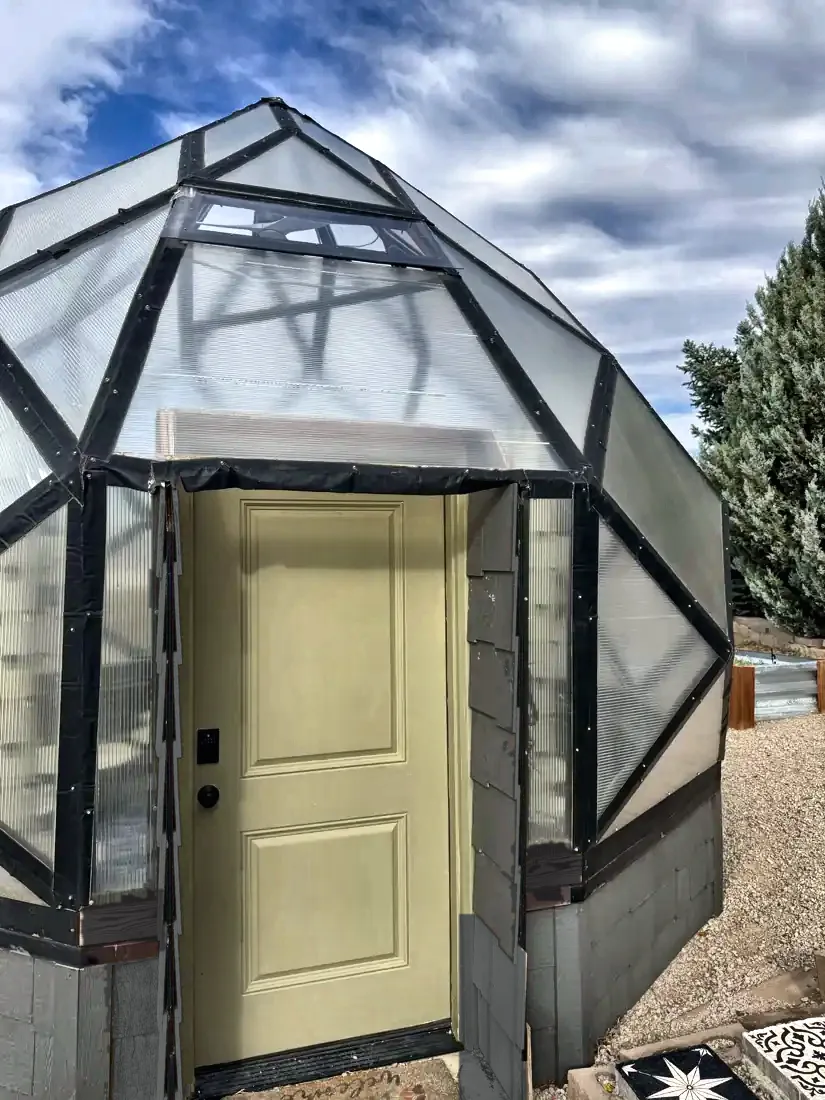
Frame, siding and door colors are your choice. Here are a few combinations, plus what it looks like inside once the towers fill in.
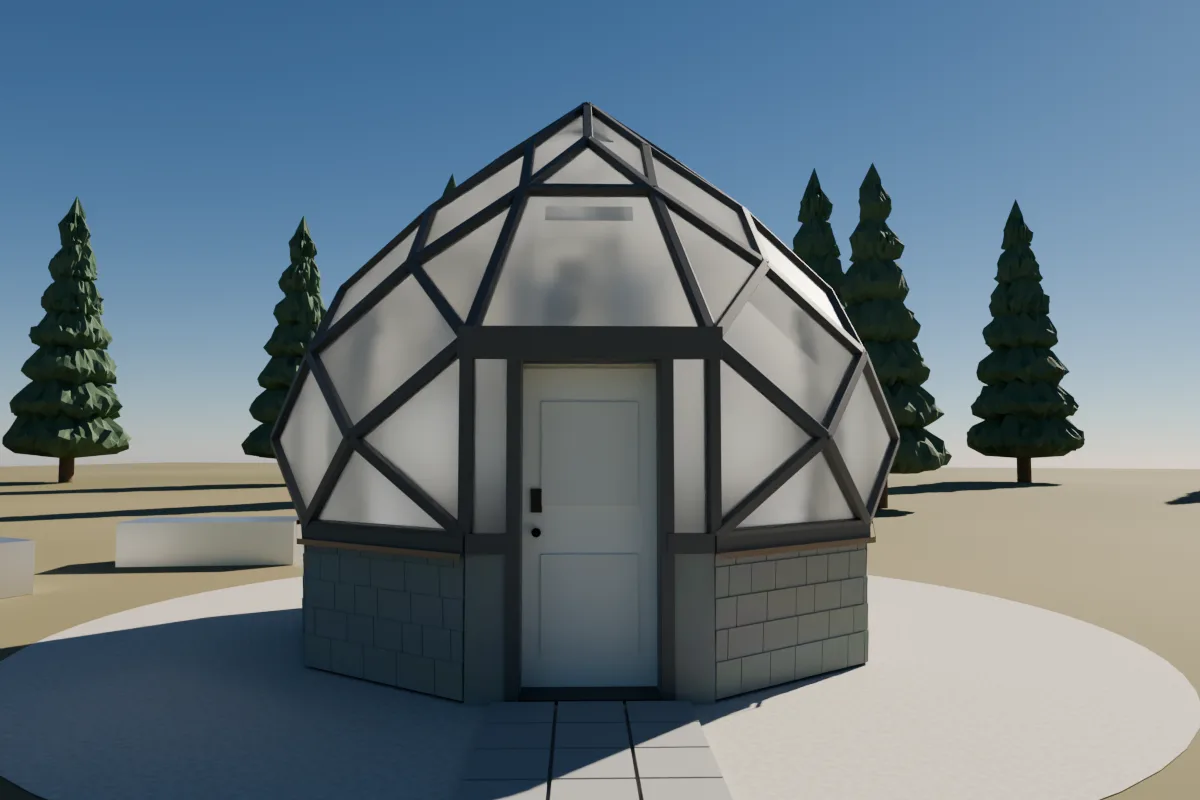
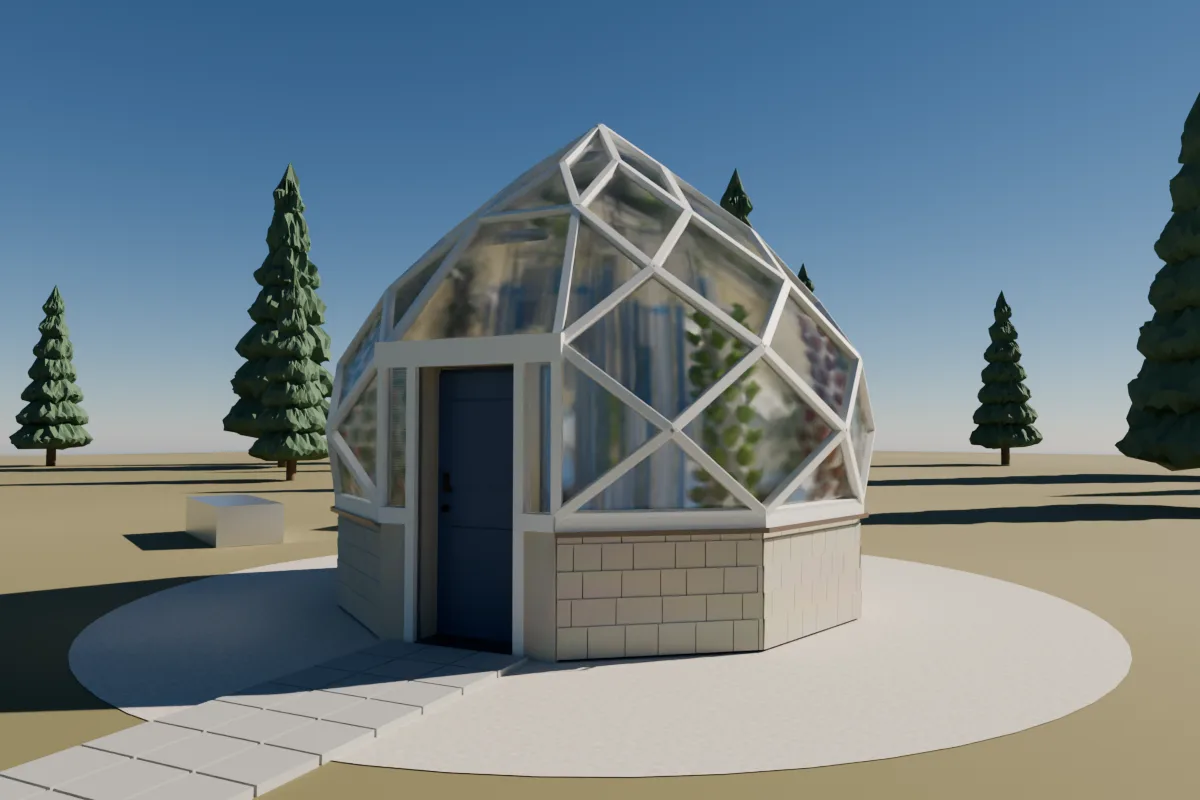
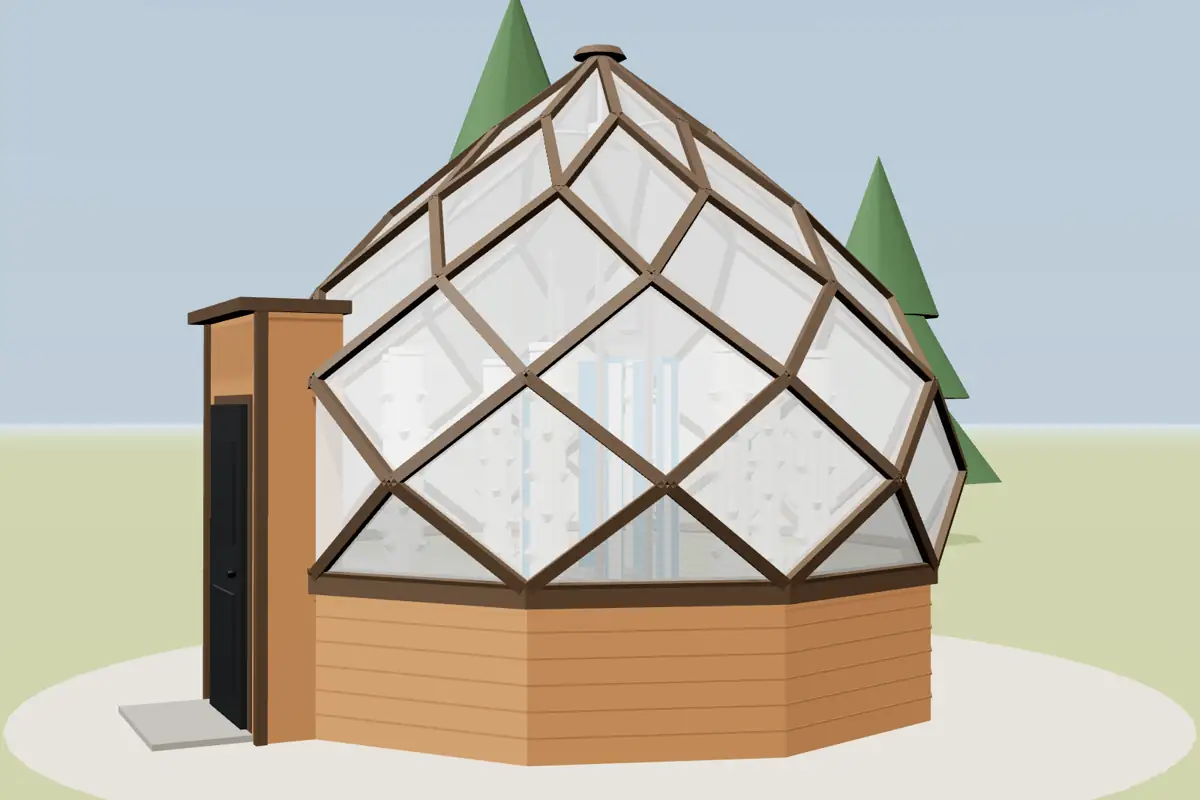
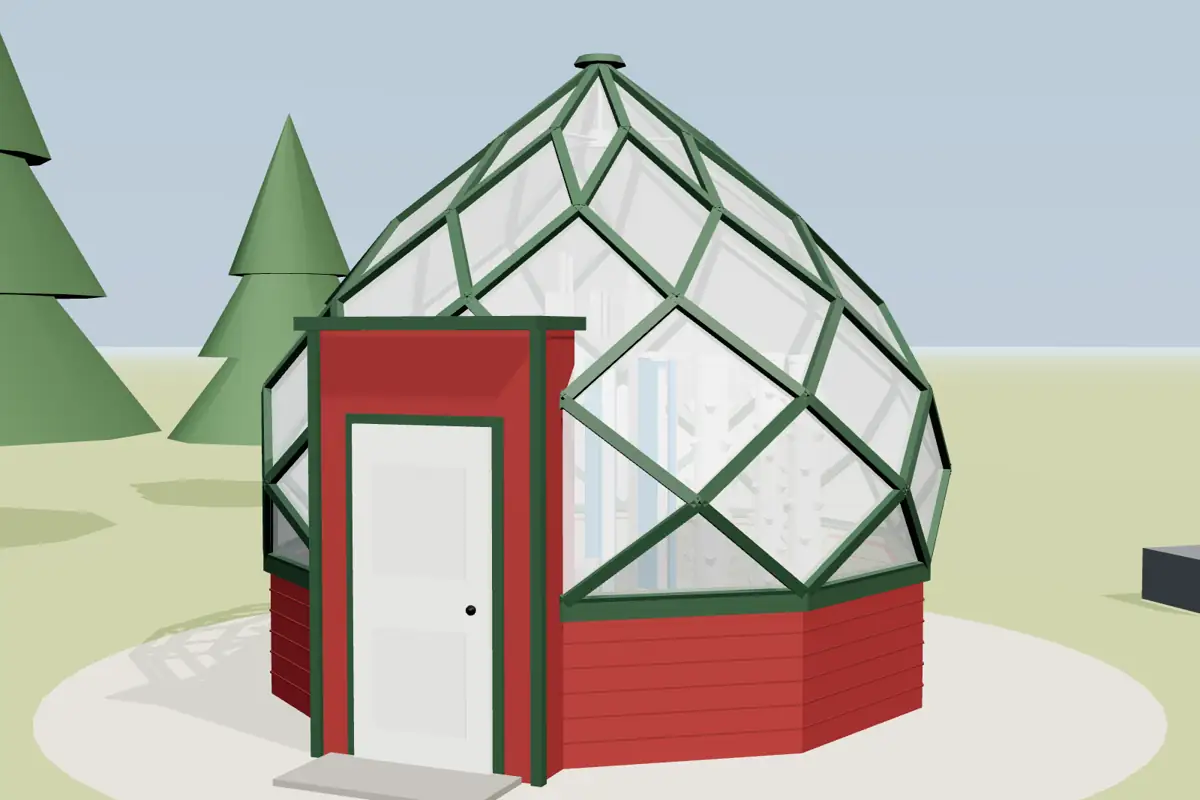
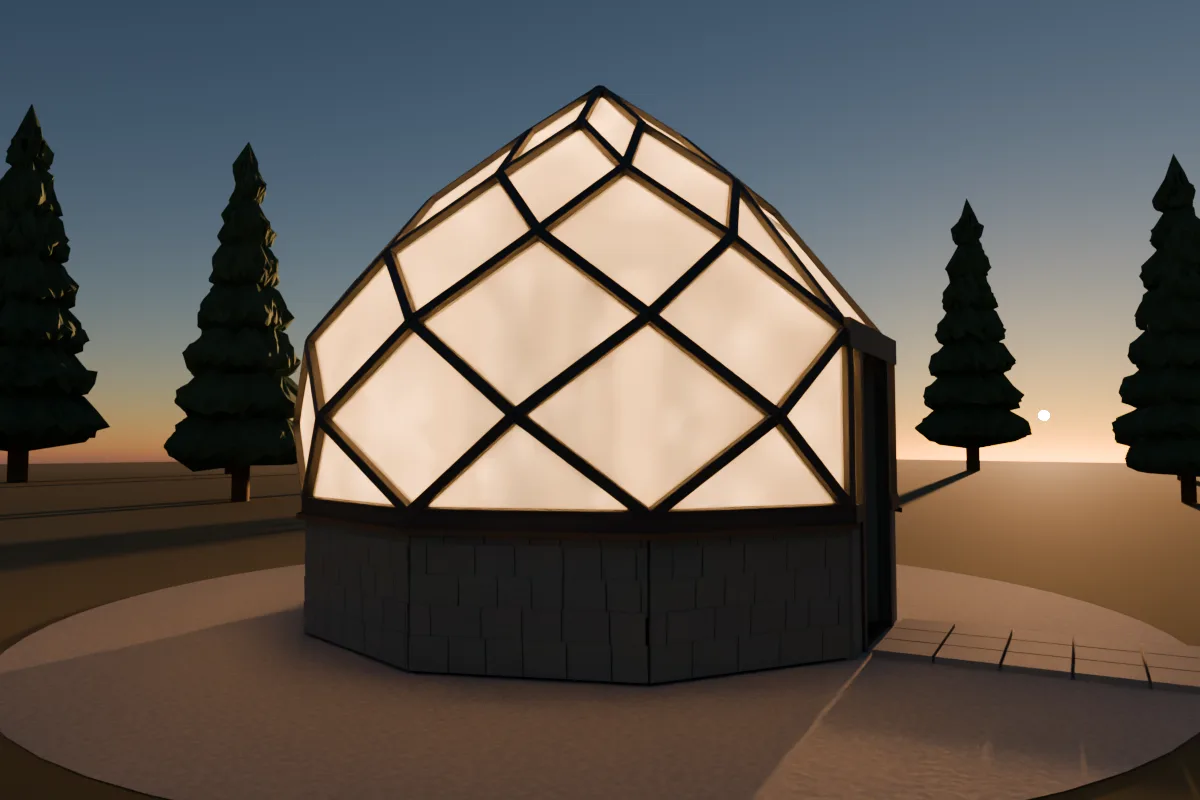
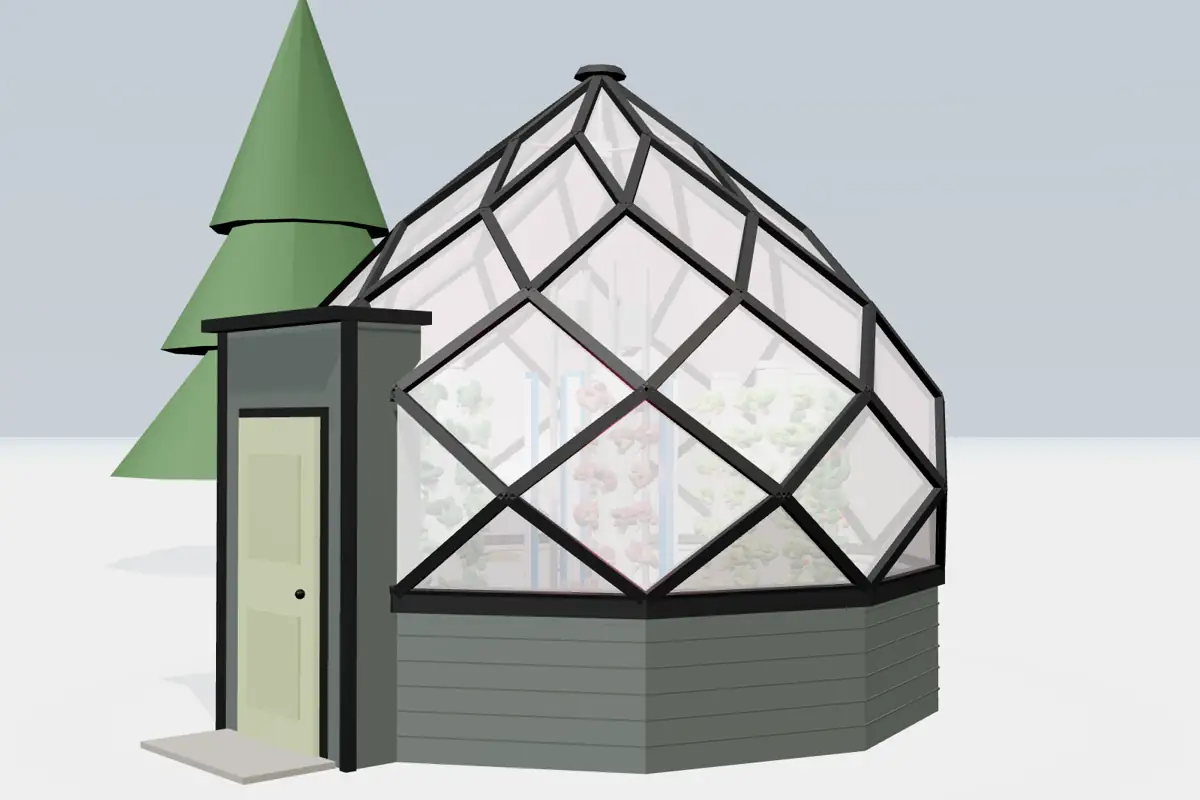
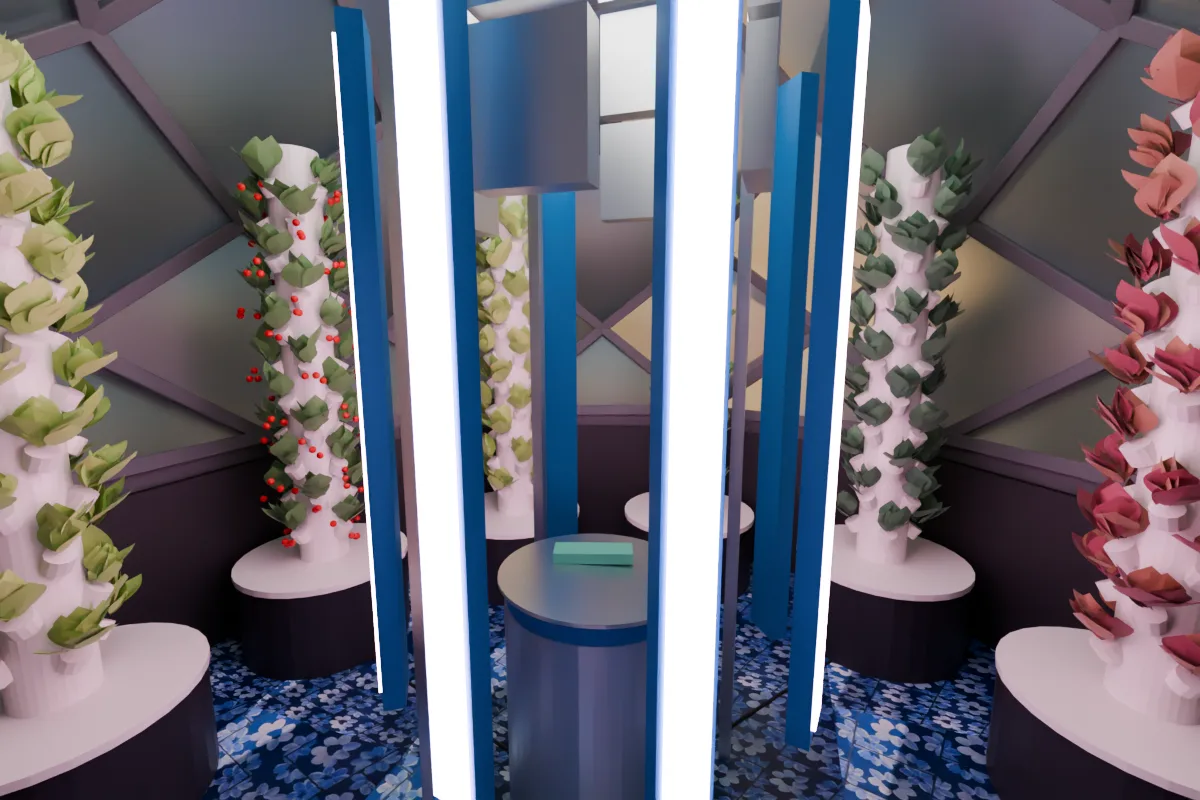
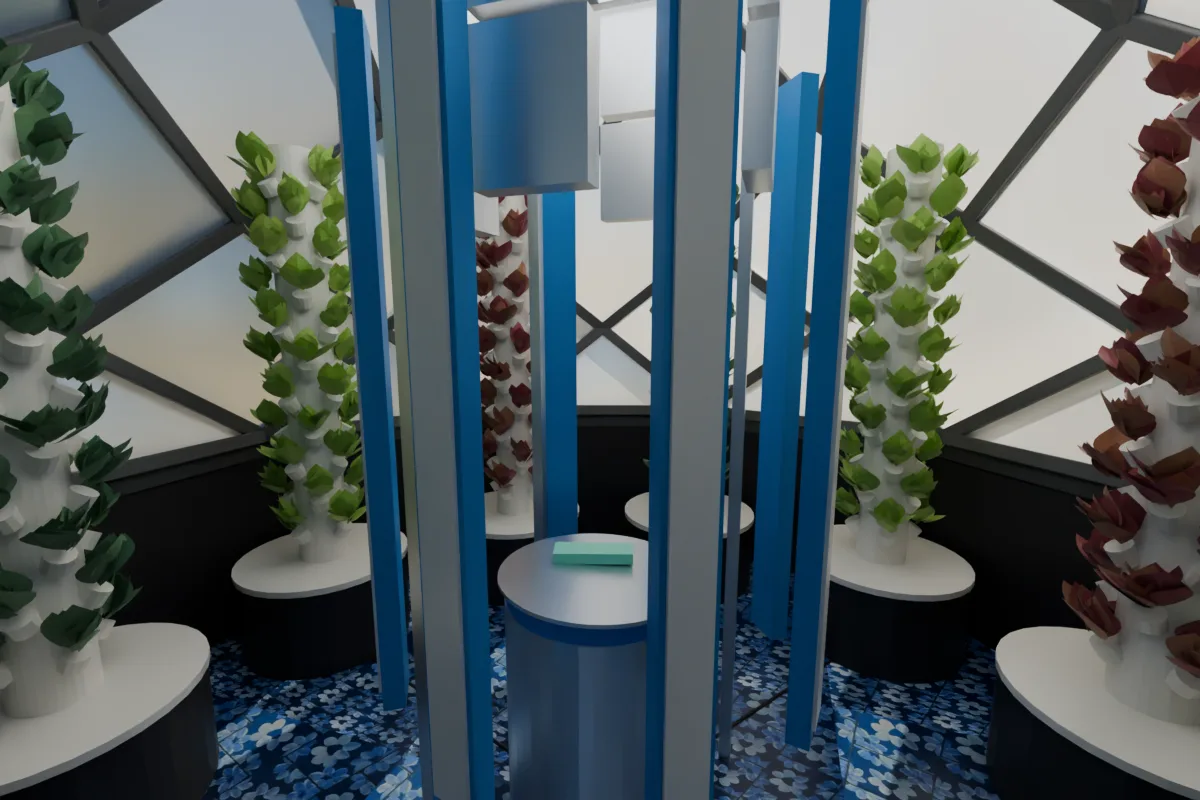
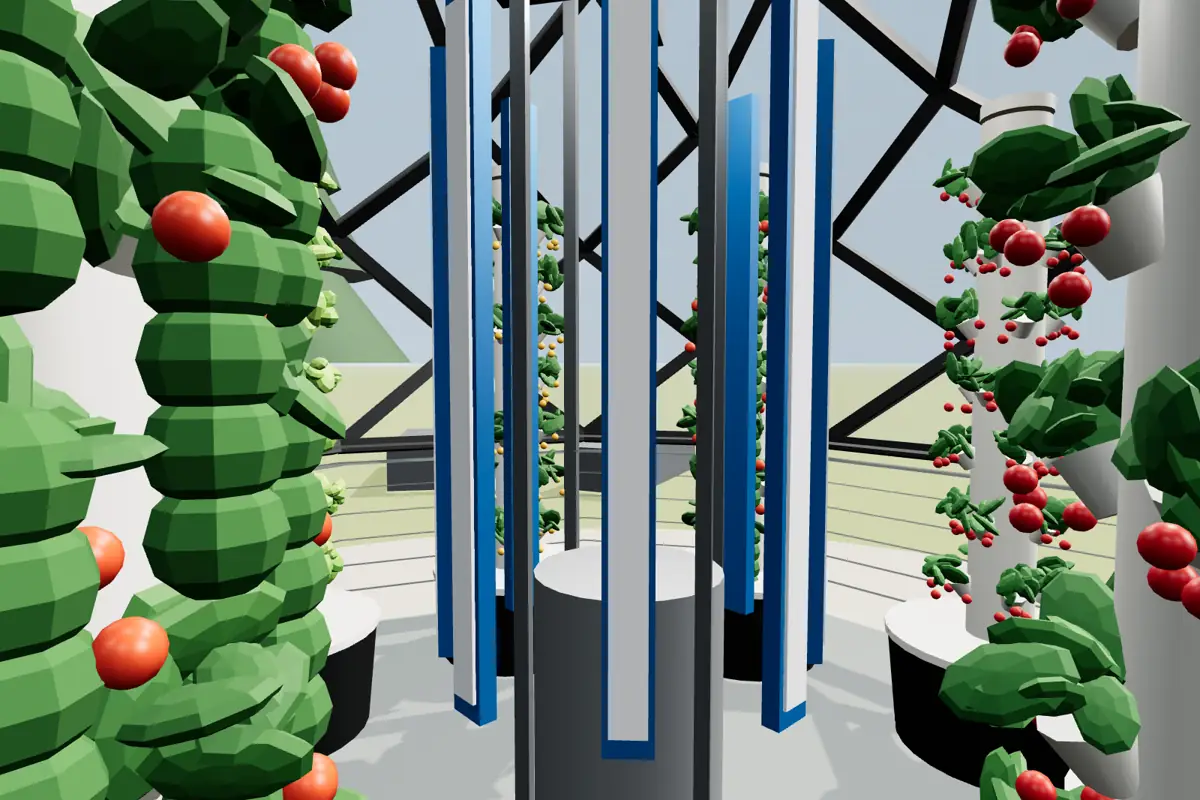
Renderings are concept images of the 16-foot design. Photos above are the real Brighton build.
352 plant sites on 8 towers grow the greens, herbs and vegetables a family eats, year-round, steps from your kitchen. You know exactly where your food comes from, because you grew it.
Grown without soil or pesticides. Harvest amounts depend on what you plant.
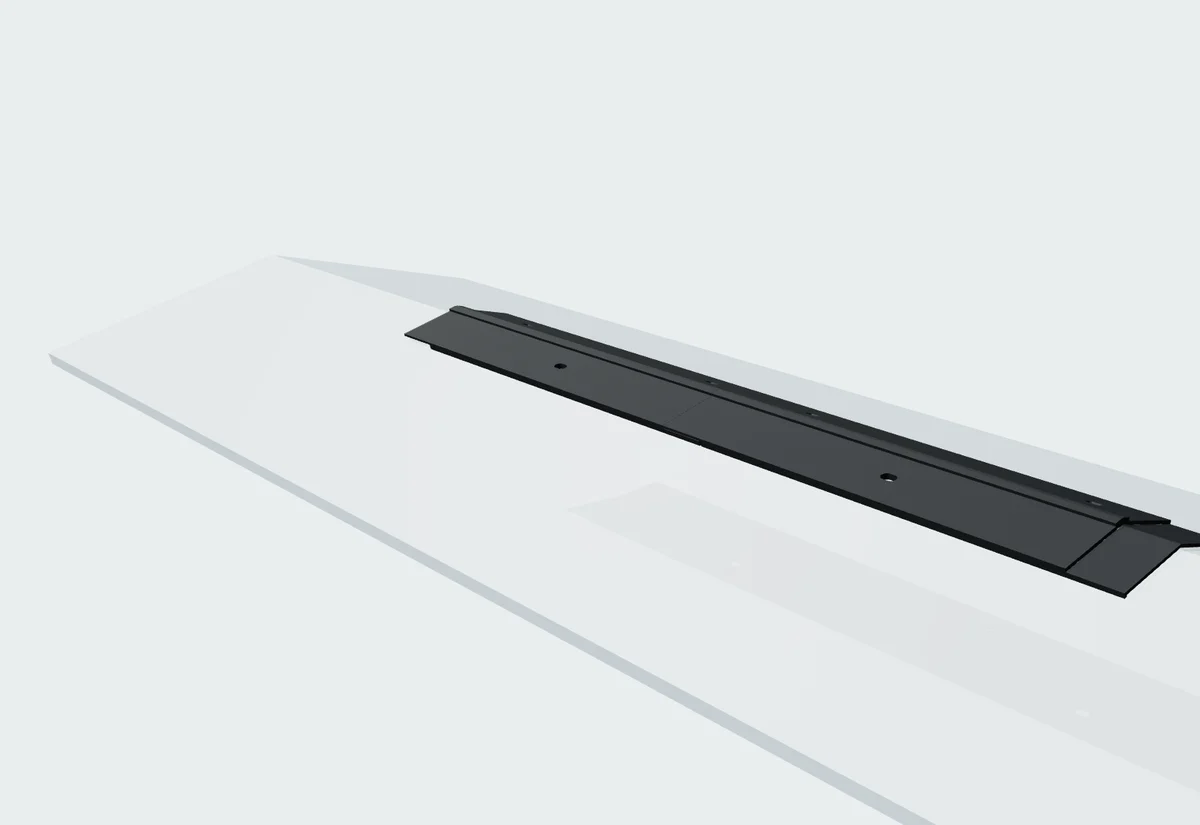
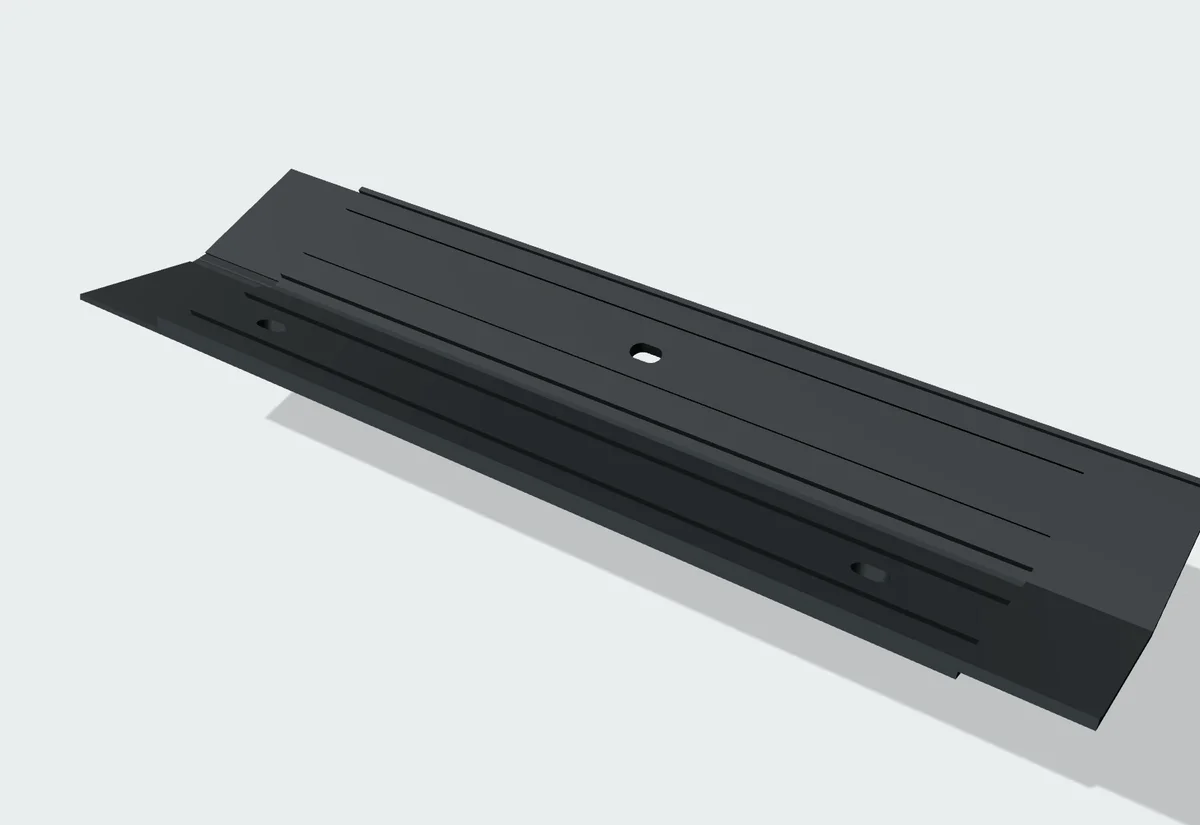
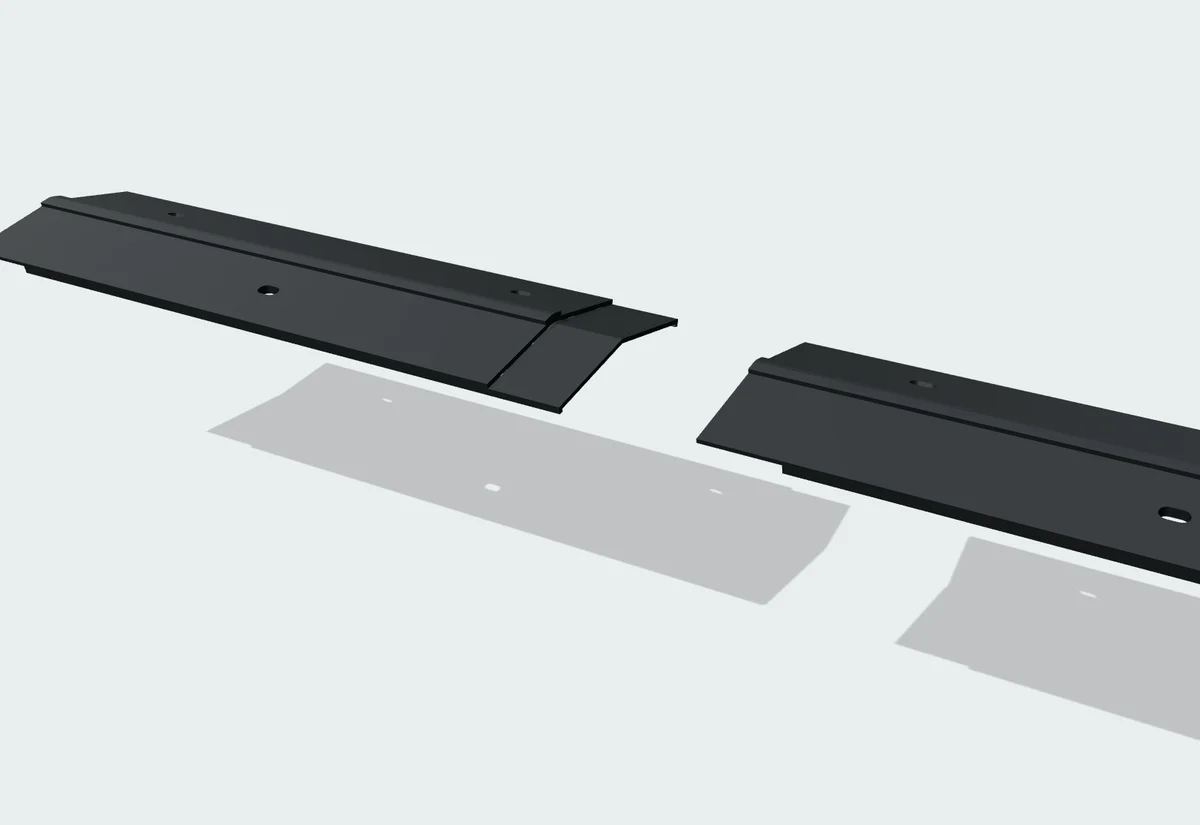
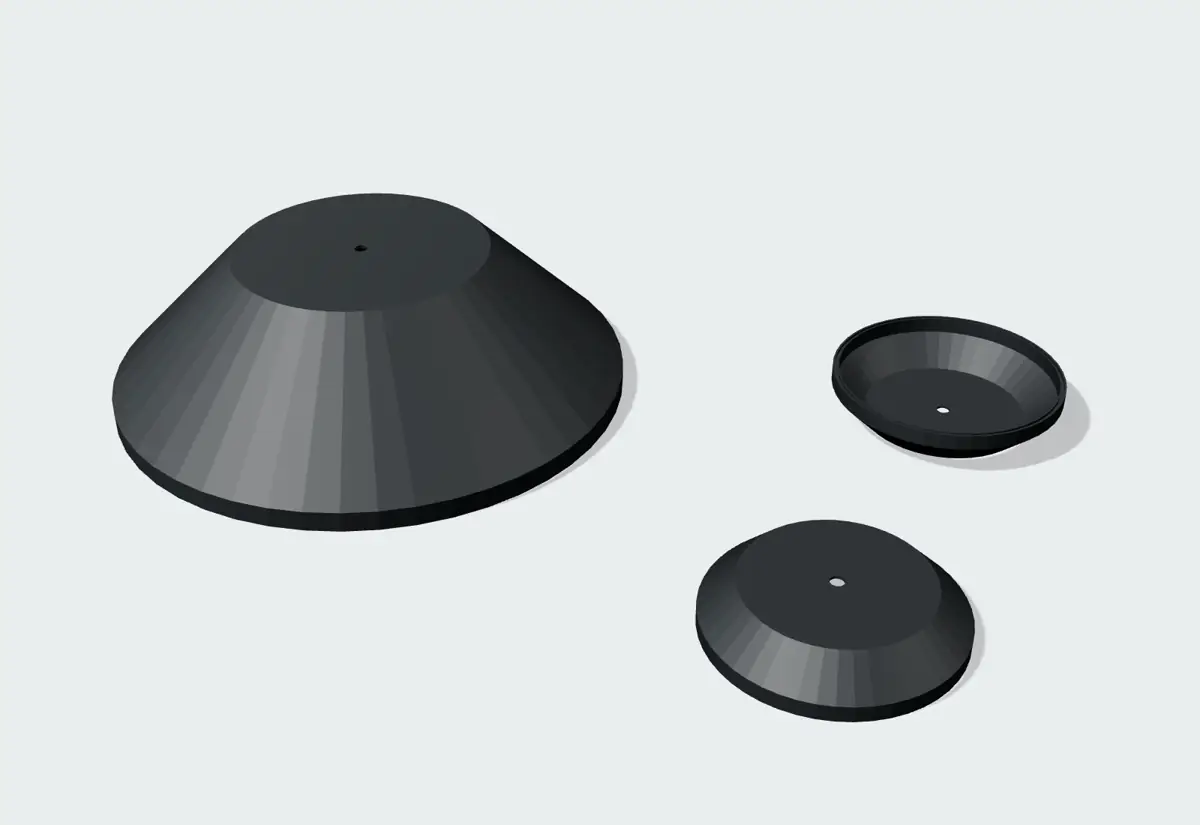
Instead of tape over the panel seams, these 3D-printed caps bed into sealant and screw down over each joint. There's one profile for each seam angle in the frame.
One build, start to finish: the foundation, the zome, the growing system and the climate control to keep it producing through a Colorado winter.
Insulated slab with a floor drain, and the 3-foot pony wall the zome sits on.
A 16-foot frame with 66 twin-wall polycarbonate panels, sealed seams and an entry door.
Vertical aeroponic towers, RO water, a central nutrient barrel and LED light bars.
Heating, cooling and ventilation sized for the zome and installed by a NATE-certified HVAC technician.
A dedicated electrical subpanel, freeze-protected water supply and a work sink.
Help getting your first crop going and dialing in the nutrients and lights.
Get the whole thing built and growing, or take on as much of it yourself as you like.
Everything above, built, planted and handed over growing.
Slab, pony wall, zome, double-layer glazing, door, power and drain. You add the growing system.
Towers, LED light bars, RO water and the nutrient system, for an existing structure.
Hyper-heat mini split, backup heat, fans and controls, sized for the zome.
Pre-built frame panels, cut glazing, printed seam trim and a full parts list, with build support by the hour.
Yes. The Brighton zome runs year-round. A 3-foot insulated pony wall, double-layer polycarbonate and a hyper-heat mini split rated to −14°F keep nights around 60°F, and a freeze alarm texts you if anything goes wrong.
Roughly $225 a month on average for lights, pumps, fans, heat, nutrients and water, at Denver electricity rates. Most of that is the grow lights in the short days of winter.
You know where your food comes from and what went on it. Greens picked minutes before dinner taste better and last longer than anything shipped across the country, and you have them in January.
Not through the water. The center barrel tops up each tower, but each tower circulates its own reservoir, so nothing passes from one tower to the next. You can clean or replant one tower while the rest keep growing.
About 2–3 hours a week to plant, harvest and check the water. The towers water and feed themselves on a timer, and a monitor shows pH and nutrient levels on your phone.
No. Leafy greens are the easiest place to start, and we help you get the first crop going and set up the nutrient schedule.
Twin-wall polycarbonate is much tougher than glass or film, and each panel can be replaced on its own. The steep upper panels shed snow, and the curved shape handles wind better than flat walls. The frame is anchored to a concrete slab.
It's a detached accessory structure, about 188 sq ft on the ground and about 15 feet tall, so most places need a building permit. We check setbacks, height limits and HOA rules before you commit, and handle the permits.
About 8–10 weeks from signing to handover, with 4–6 weeks of work on site. The frame panels are built in the shop while the permit is in review.
Yes. Cherry tomatoes, strawberries and peppers all grow on the towers. Greens and herbs give the most food per plant site, so most growers keep a mix.
You call one company: the same licensed HVAC contractor that built it. The lights, mini split and towers also carry their manufacturers' warranties.
Call or text Jason to set up a tour of the Brighton zome or to talk about building one for your family.